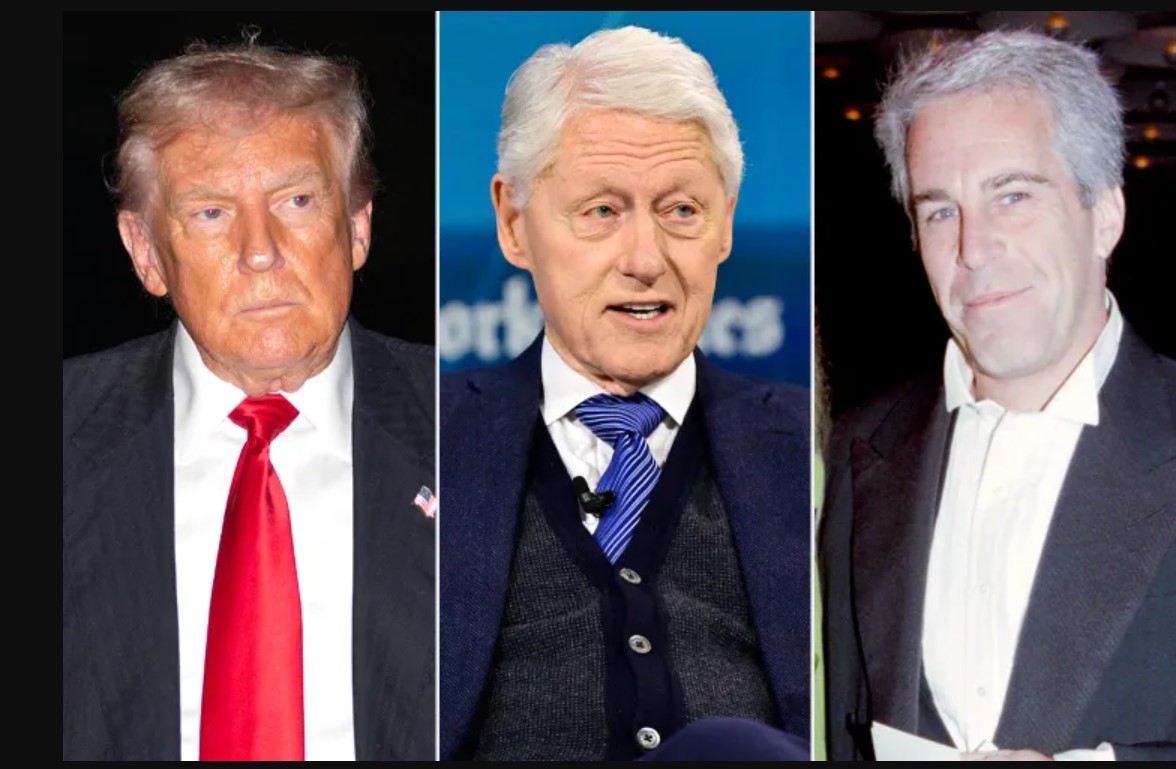
An offhand line in a private email has turned into a full blown internet storm. In a 2018 message, Jeffrey Epstein’s brother, Mark, wrote about “Trump blowing Bubba,” and that single phrase exploded across social media in 2025.
Because Bubba is a well known nickname for Bill Clinton, many people assumed the email was a coded reference to the former president. Screenshots flew around X, memes piled up, and the story quickly became a partisan weapon.
Now Mark Epstein is pushing back. He says very clearly that the “Bubba” in his email is not Bill Clinton, that the message was a joke between brothers, and that people are reading far more into it than he ever intended. The email came from a large batch of documents released by the U.S. House Oversight Committee, and the fight over what it means has only grown.
So what did the email actually say, and what does Mark Epstein want people to understand?
What Did Epstein’s Email About ‘Trump Blowing Bubba’ Actually Say?
The email at the center of the controversy was written in March 2018. It came from Mark Epstein to his brother Jeffrey, and it surfaced in 2025 when the House Oversight Committee released more than 20,000 pages of emails tied to the Epstein estate.
In the message, Mark used casual, joking language. At one point, he wrote a line that quickly became the focus of attention: a claim that “Putin has the photos of Trump b*****g Bubba.” The censored word points to a sexual act, which is why the phrase grabbed so much attention once it hit the internet.
The tone of the email was informal. It read like two brothers gossiping and joking about politics, power, and people they watched on the news. It was not written like a legal brief or an intelligence report. That matters, because people online often treat any leaked line as if it were a sworn statement.
The email also included a claim that Donald Trump “knew about the girls.” That phrase folded the message into the larger public fight over what Trump did or did not know about Jeffrey Epstein’s crimes. Trump has strongly denied that claim, and there is no independent proof in the email itself that the statement is true. It is an allegation in a private conversation, not evidence on its own.
News outlets that reviewed the document dump stressed that many of the messages showed Epstein watching Trump and other public figures closely, sometimes with crude language or harsh opinions. For example, a broader overview of the emails highlighted how Epstein talked about Trump’s business dealings and social standing in sharp terms, without turning those opinions into proven facts. You can see that wider context in coverage such as NBC News’ report on Epstein emails mentioning Trump, Clinton, and Prince Andrew.
That single line about “Trump blowing Bubba” was one sentence inside a huge pile of documents. Yet it is the line that stuck, because of who it seemed to involve and the mental image it created.
How the Epstein emails surfaced in 2025
The 2018 message did not leak on its own. It arrived as part of a massive document release by the U.S. House Oversight Committee in 2025, which collected emails, schedules, and other material tied to Jeffrey Epstein and his estate.
Lawmakers said they wanted to shed light on Epstein’s network, contacts, and communications with powerful people. Under pressure from both parties, and amid intense public interest, they pushed for broad disclosure instead of selective leaks.
This meant thousands of pages went online at once. Reporters, activists, and curious users raced through the files, pulling out lines that mentioned famous names or shocking details. That is how this specific email, a small item in a huge archive, ended up at the center of a media storm.
Coverage of the release pointed out that the documents painted a picture of a “clubby” elite world that already feels like a different era. The New York Times’ piece on the newly released Epstein emails described how they captured a particular social set more than they proved criminal acts on their own.
Transparency, pressure from victims’ advocates, and partisan interest all fed into the decision to publish the emails. Once they were out, it was only a matter of time before a line as explosive as “Trump blowing Bubba” caught fire.
The viral line: ‘Putin has the photos of Trump b*****g Bubba’
The exact phrase that went viral mixed three powerful names in one sentence: Trump, Putin, and “Bubba.” It added a sexual act and hinted at compromising photos.
That is internet rocket fuel.
People shared screenshots of the line with very little context. Some turned it into memes. Others wrote shocked captions, or folded it into their existing views about Trump, Russia, and Epstein. A phrase that was part of a joking email became a standalone claim in the public mind.
The censored word “b*****g” made the quote even more shareable. It signaled something taboo without spelling it out. Humor, shock, and political rivalry all helped the line spread. Supporters of different political figures used it to attack their opponents or to say “look, this proves what I always thought.”
But the underlying point remains simple. This line is an allegation in a private email, used in mocking language, and it has not been backed up by photos or independent evidence. Without that, it is a statement, not a proven event.
Trump’s response and claims of a ‘hoax’
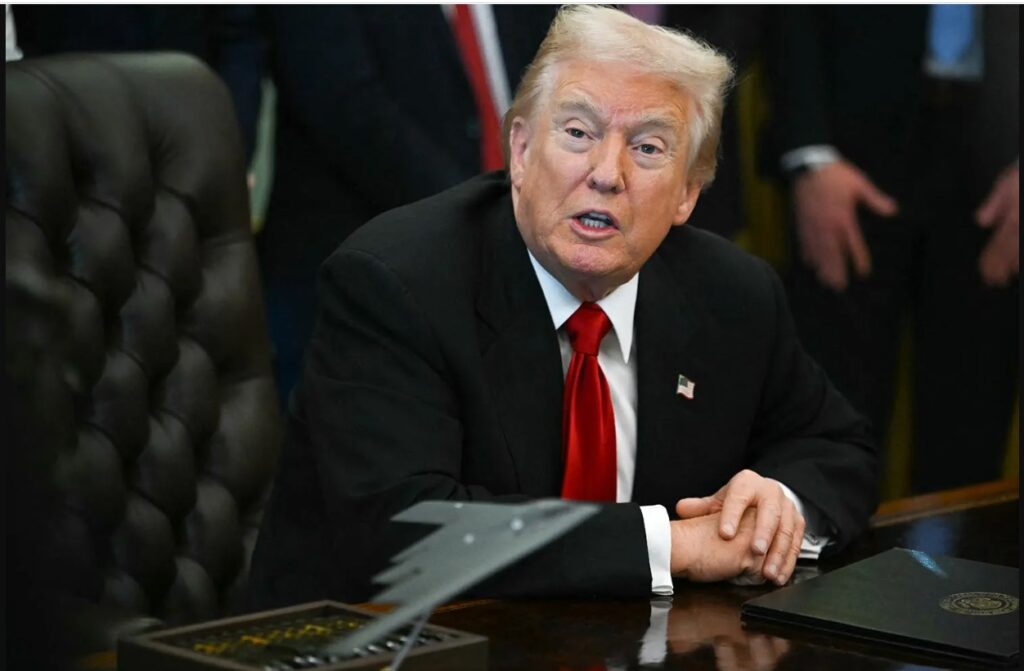
Donald Trump responded in his own style. Through public statements and posts on Truth Social, he called the emails a hoax and said he never “knew about the girls,” pushing back on Epstein’s claim.
Trump’s team also tried to turn attention toward Epstein’s ties to other high profile figures. They argued that political opponents were cherry picking phrases and weaponizing gossip, instead of looking at the broader picture of who moved in Epstein’s circles. Reporting on the full email cache, such as ABC News coverage of Epstein’s focus on Trump in his private messages, shows that Trump was far from the only person on Epstein’s radar.
The clash over the emails landed in an already heated environment, where almost any new piece of Epstein material turns into a fight about power, privilege, and who knew what.
Why People Thought ‘Bubba’ Meant Bill Clinton
The name “Bubba” is common in the South, but online, one figure stands out: Bill Clinton. That is why, as soon as people saw “Trump blowing Bubba,” many jumped to the conclusion that “Bubba” was a code word for the former president.
The logic was simple, even if it was not backed by proof. Clinton has long been linked to that nickname. He also had a known social and professional history with Jeffrey Epstein. Put those two facts next to a shocking quote in an email and the guess felt obvious to many.
Partisan media outlets and social media accounts then treated that guess as if it were a confirmed detail. Headlines and viral posts framed the email as a Trump and Clinton sex scandal, even though the message never used Bill Clinton’s name.
This chain reaction happened before Mark Epstein stepped forward to say that “Bubba” did not mean Clinton at all.
Bill Clinton’s long-time nickname ‘Bubba’
Bill Clinton’s “Bubba” nickname goes back decades. It ties into his Arkansas roots and the image of a friendly Southern politician who liked to project a laid back, folksy vibe.
Journalists, political commentators, and late night hosts have all used “Bubba” as shorthand for Clinton. For people who follow American politics, the nickname is as familiar as “Slick Willie” or “W.”
So when readers saw a line about “Trump blowing Bubba,” their minds went straight to the most famous Bubba they knew. That mental shortcut is understandable, but it does not prove that the email was about Clinton. It only explains why the rumor started so quickly.
Epstein’s past ties to Clinton fueled speculation
There is another layer that made the theory feel believable to many people. Bill Clinton had documented contact with Jeffrey Epstein, including social interactions that have been reported for years. His name appears often in stories about Epstein’s network, which keeps him linked to the scandal even without fresh proof of wrongdoing.
That history created a kind of expectation. When people saw a mysterious nickname in an Epstein email, they filled in the blank with a name already tied to the story. In this case, that blank became Clinton.
Broad coverage of the new email release, like NBC’s look at how Epstein talked about Trump, Clinton, and others in his emails, shows how easily the public blends old facts with new hints to build a bigger story.
How social media turned a guess into ‘truth’
Social media is quick to turn guesses into “facts.” One user makes a claim. Another repeats it in stronger terms. Memes and partisan influencers then treat that claim as confirmed.
That is what happened with “Bubba.” The email never named Bill Clinton, but posts and threads treated the nickname as clear proof. People who were already suspicious of Clinton shared the claim without checking the source document or waiting for context.
In a few hours, the internet moved from “this might be Clinton” to “this is about Clinton,” even though no new evidence had appeared.
Mark Epstein Says ‘Bubba’ Is Not Bill Clinton: What He Really Meant
After the phrase went viral, Mark Epstein stepped in to clean up what he saw as a massive misunderstanding. He said that the 2018 emails were humorous private exchanges between brothers, not serious accusations or reports meant for public eyes.
Mark told reporters and investigators that “Bubba” was not Bill Clinton in any way. He described Bubba as a private person, not a public figure, and pushed back on online attempts to tie the name to politicians. He stressed that people were taking a joking line and treating it as a literal claim about real events.
He also rejected other wild theories about who “Bubba” might be. As the rumor grew, some users tried to attach the nickname to different politicians or celebrities. Mark said those guesses were all wrong.
Reporting on his comments, in the wake of the Oversight Committee release, has underlined this point. The “Bubba” in the email is still not publicly identified, and Mark has made clear that the phrase should not be used as a shortcut to drag specific public figures into new accusations. Broader coverage of the political reaction to the emails, such as BBC reporting on investigations into Epstein’s ties, shows how every new detail is being pulled into existing battles.
At the core, Mark’s message is simple. Read the email in context, remember it was private, and do not treat a joke line as a proven fact.
Mark Epstein’s statement on the ‘Bubba’ rumor
Mark Epstein has laid out several key points about the email:
- The messages were private jokes between brothers, written in casual language.
- The “Putin has the photos of Trump b*****g Bubba” line was not meant as a serious statement of fact.
- “Bubba” does not refer to Bill Clinton, but to a private individual outside the public eye.
- The email was never meant to be seen outside that small family context.
He has even used the phrase “for the avoidance of doubt” when stressing that the email was not about Clinton. For him, that should close the question.
Why his clarification does not erase public doubt
Even with that clear statement, many people online still do not believe him. They prefer their own version of the story.
There are a few reasons. People have deep distrust of political and financial elites. Epstein’s crimes and death created a lasting sense that the full truth has never come out. In such a climate, any denial from someone tied to Epstein can feel suspect, no matter how direct it is.
Political polarization also plays a role. For some, the idea that the phrase ties Trump and Clinton together in a shocking secret feels too satisfying to give up. It fits their view of both men, so they hold onto it.
Legally and factually, Mark’s clarification matters. In the more emotional court of public opinion, people often keep the version of events that matches their beliefs.
What this story shows about rumors, power, and the internet
This episode is a clear example of how one joking line in a private email can explode once it involves names like Trump, Clinton, and Putin. The mix of sex, power, and secrecy is irresistible online.
The risk is that people treat every leaked line as literal truth. Context falls away. Screenshots stand in for full documents. Feelings about a public figure drive what readers decide is “obvious.”
Slowing down helps. Reading primary sources when possible helps. So does asking a simple question: Am I sharing this because it is proven, or because it fits what I already want to believe?
Conclusion
The now famous line about “Trump blowing Bubba” started as one sentence in a 2018 email from Mark Epstein to his brother Jeffrey. It surfaced in a 2025 document release, went viral, and sparked a storm of guesses that “Bubba” meant Bill Clinton. Mark Epstein has since said clearly that this is wrong and that the email was a private joke about a non famous person.
This whole episode shows how fast rumors grow when powerful names and shocking images mix. It also shows how far an email claim can travel before anyone stops to ask what is actually proven. The next time a leaked phrase floods your feed, remember this story, and treat that kind of “evidence” with a little more care and a lot more skepticism.